Kailasa Temple, Ellora: The Rock-Cut Wonder of India
1) What is the Kailasa Temple at Ellora?
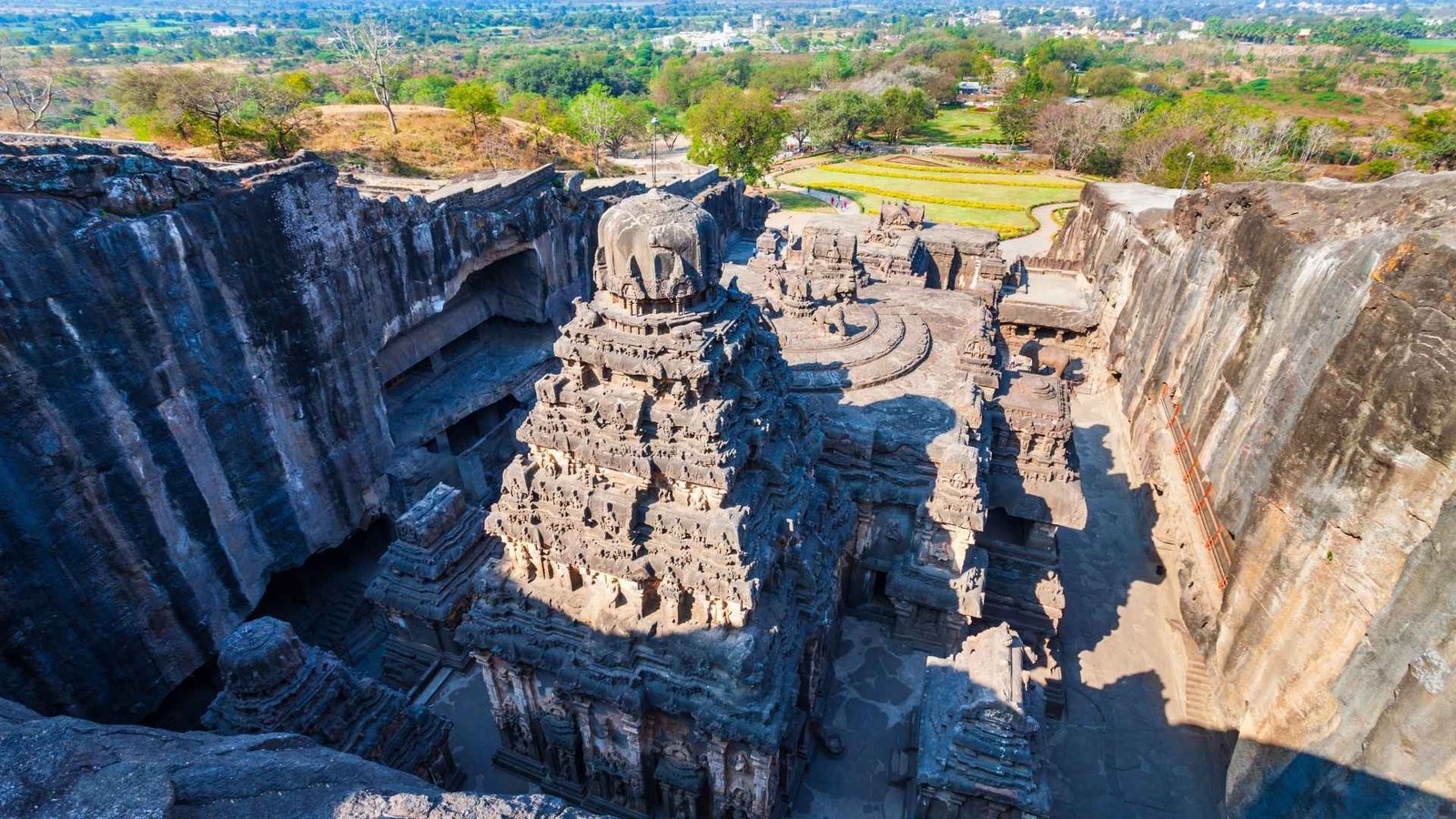
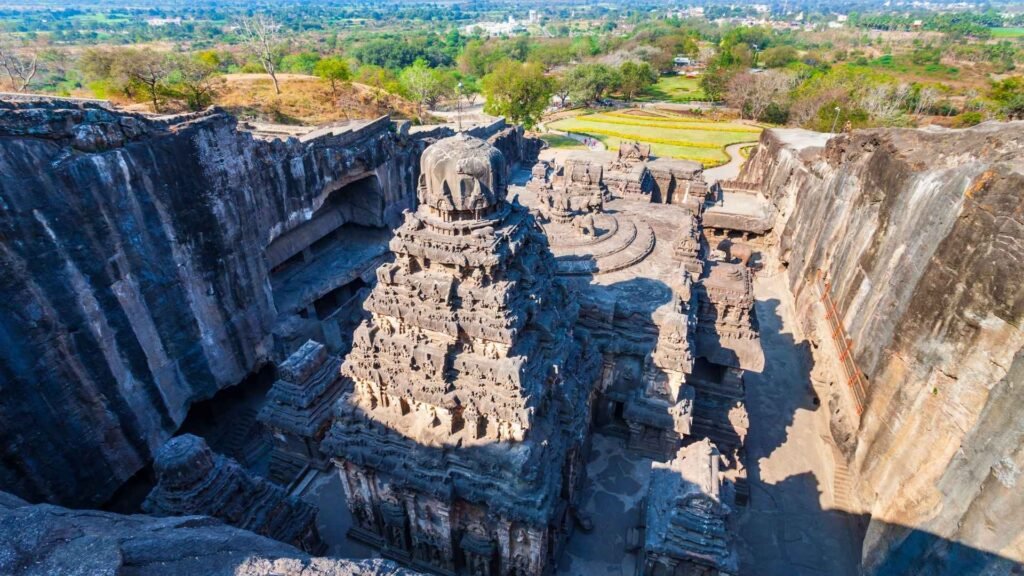
The Kailasa Temple (also written Kailashanatha) is a famous Hindu temple carved from rock at the Ellora Caves in Maharashtra, India. It is also known as Cave 16 in the Ellora group. This temple is special because it is a monolithic structure—meaning it was carved from one single rock instead of being built with separate stones.
Ellora is not only a Hindu site. The Ellora complex has 34 rock-cut caves, including Buddhist, Hindu, and Jain monuments, showing a long history of art and faith in the region.
2) Where is Kailasa Temple located?
Kailasa Temple is inside the Ellora Caves area near present-day Chhatrapati Sambhajinagar (Aurangabad) in Maharashtra. The caves are cut into basalt rock hills and stretch for about 2 km along the cliff.
3) Why is it called “Kailasa”?
The temple is named after Mount Kailash, which is traditionally believed to be the home of Lord Shiva. Because the temple is dedicated mainly to Shiva, the name “Kailasa” fits its religious meaning and design idea.
4) When was the Kailasa Temple made, and who built it?
Most historians link the main excavation of the temple to the Rashtrakuta king Krishna I, in the 8th century CE. Some parts may have been completed later, but the temple is widely connected with Krishna I’s period.
This is an EEAT-friendly point: the exact dates can be discussed by scholars, but major trusted references consistently place the temple in the Rashtrakuta era and around the 8th century.
5) How was the Kailasa Temple carved from one rock?
Most temples are built by stacking stones. The Kailasa Temple is different: artisans cut and removed rock to “release” a complete temple from the hillside.
A key fact often mentioned is the method: the complex was carved downward from the rock, rather than cutting straight into the cliff like many cave shrines. This means workers likely started higher and removed rock step-by-step to shape the courtyard and temple forms.
The Archaeological Survey of India (ASI) calls Kailasa (Cave 16) the largest single monolithic excavation at Ellora and highlights its world fame for this reason.
6) What does the temple look like? (Simple layout)
Kailasa Temple is designed like a free-standing temple complex, but carved from rock. You can understand it in simple parts:
A) Large open courtyard
When you enter Cave 16 area, you see a big open courtyard surrounded by high rock walls. This creates the feeling of a temple campus inside a stone “pit.” UNESCO notes that Cave 16 (Kailasa) is an excellent example of innovation and marks the high point of India’s rock-cut architecture.
B) Nandi Mandapa (bull pavilion)
In many Shiva temples, Nandi (the bull) sits facing Shiva. The Kailasa complex also has a Nandi pavilion placed in front of the main shrine, following this tradition.
C) Main Shiva shrine
The central temple houses the sacred space for Shiva (the sanctum). The main tower shape and overall plan reflect strong temple architecture traditions, but carved in rock instead of built with blocks.
D) Sculpted base and “supporting elephants”
A striking visual feature is the carved base, where elephant forms appear to hold up the temple platform. This makes the temple look like it is standing on living strength and adds to the dramatic effect.
7) Famous carvings and artworks inside Kailasa Temple
Kailasa Temple is not only big—it is also filled with detailed art. UNESCO praises Ellora’s bold and fine sculptural compositions, and Kailasa is among the best examples.
Ravana shaking Mount Kailash (a celebrated relief)
One of the most famous relief scenes at Kailasa shows Ravana shaking Mount Kailash while Shiva and Parvati remain calm. Britannica specifically mentions this Kailasa relief as a notable composition at the site.
Many deities and story panels
The temple includes large sculptural panels and figures of Hindu deities and myth scenes across walls, gateways, and halls. Even if you do not know every story, the carvings show movement, emotion, and strong craftsmanship.
8) Why is Kailasa Temple considered a world wonder?
Kailasa Temple is seen as a masterpiece because:
- Scale: It is the largest monolithic temple in the Ellora group.
- Engineering skill: Carving a complete temple complex from rock required planning and accuracy.
- Art quality: UNESCO highlights Ellora’s sculptural excellence, especially in Cave 16.
- Cultural value: Ellora together shows Buddhist, Hindu, and Jain monuments in one area, reflecting a long history of art and ideas.
Because of this outstanding universal value, Ellora Caves are a UNESCO World Heritage Site.
9) Visiting and protecting the monument (responsible tourism)
Kailasa Temple is a protected heritage site. Large crowds can cause problems like congestion and damage risk, so visitors should follow rules, avoid touching carvings, and respect restricted areas.
References
- UNESCO World Heritage Centre – Ellora Caves (Cave 16: Kailasa)
- Archaeological Survey of India (ASI) – World Heritage: Ellora Caves
- Encyclopaedia Britannica – Ellora Caves
- Encyclopaedia Britannica – Kailasa (Kailasanatha; Cave 16)
- Wikipedia (overview details such as common dating attribution) – Kailasa Temple, Ellora
- Times of India (heritage management context) – crowd challenges at Ellora