Biryani Origin : History, Meaning, and How Biryani Started
Table of Contents
Biryani is one of the most loved rice dishes in the world. It is known for its fragrant rice, rich spices, and layered cooking style. But many people still ask the same question: Where did biryani come from? The simple answer is—biryani’s exact origin is debated, but most food historians agree it grew through Persian–Central Asian cooking methods and then evolved strongly in the Indian subcontinent over centuries. (Encyclopedia Britannica)
What Is Biryani?
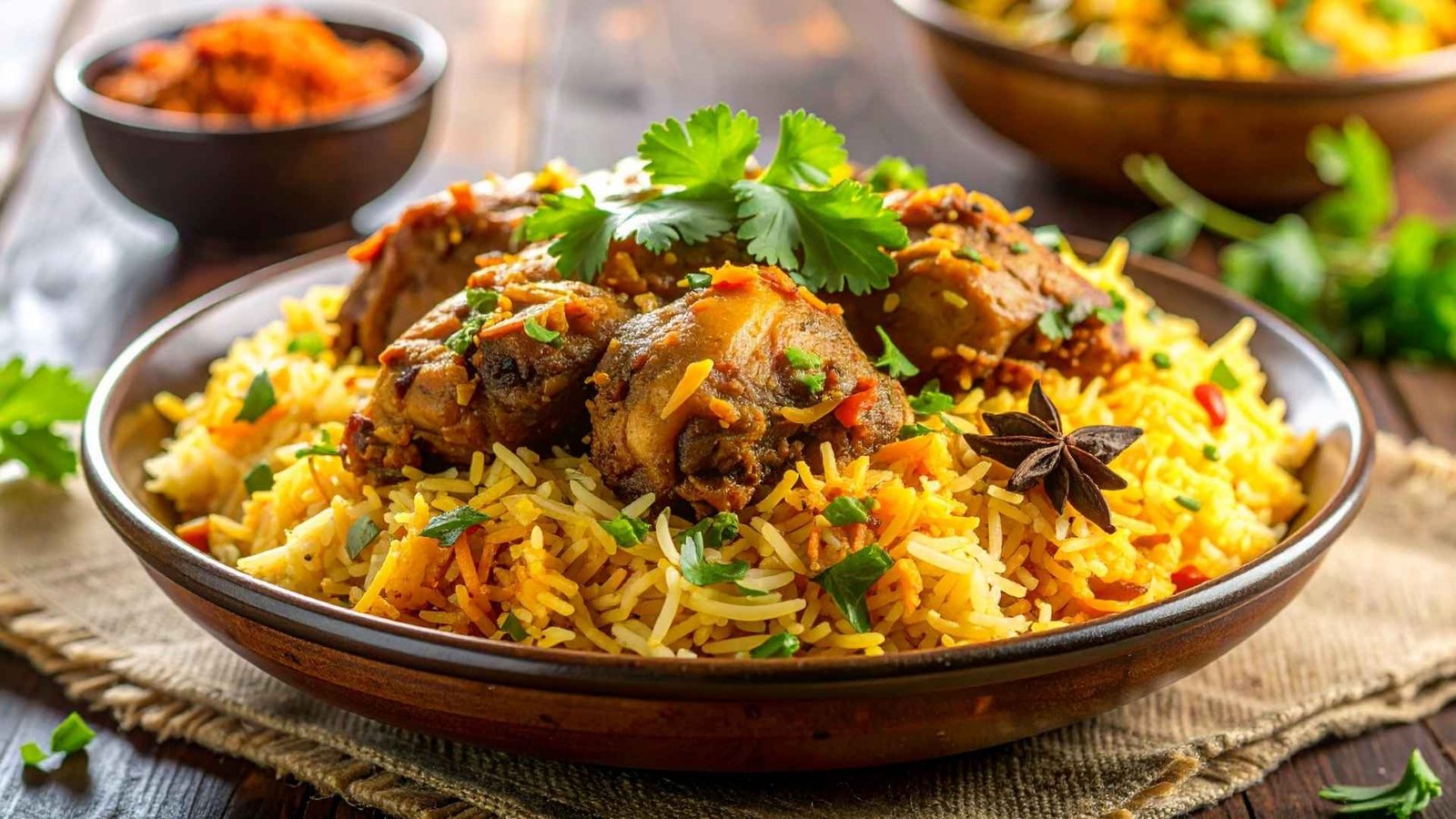
Biryani is a spiced rice dish made by cooking rice with meat, eggs, or vegetables, along with aromatics like fried onions, herbs, and whole spices. A key feature is the layering technique—rice and cooked filling are arranged in layers and finished with slow steaming. Britannica describes this layered method and explains that rice is often partially cooked first and then finished by steaming with the other ingredients in a pot. (Encyclopedia Britannica)
Meaning of the Word “Biryani”
The word “biryani” is strongly linked to Persian language roots.
- Britannica says the term comes from the Farsi phrase “birinj biriyan”, meaning “fried rice.” (Encyclopedia Britannica)
- Oxford Reference also connects the term to Persian origins (Urdu from Persian), linked to the idea of fried/grilled. (oxfordreference.com)
So even the name suggests a cooking method where rice is treated with fat/heat before finishing.
Where Did Biryani Originate? (The Honest, Research-Based Answer)
There are two major ideas about biryani’s origin, and historians do not all agree on one single “birthplace.”
1) Persian influence + evolution in South Asia
Many sources explain biryani likely developed from Persian rice dishes like pilaf/pulao, then evolved into something richer in the subcontinent through local spices, techniques, and ingredients. This “fusion growth” idea is common in historical discussions of biryani’s roots. (Encyclopedia Britannica)
2) Mughal court development (popular theory)
Another widely known view is that biryani became a major dish in Mughal-era India, where royal kitchens supported innovation and large-scale cooking. A key historical point often discussed is that the Mughal-era document Ain-i-Akbari (written 1589–1596) is associated with detailed records of food culture from Akbar’s time. (Wikipedia)
A careful note
Because biryani spread through travel, armies, pilgrims, and royal kitchens, it is best to say:
✅ Biryani has Persian roots in name and method, and it became what we know today through strong evolution in the Indian subcontinent.
How Biryani Likely Reached India (Simple Timeline)
Here is a simple way to understand the journey:
- Persian rice traditions (pilaf-style cooking) are very old and spread across regions through trade and movement. (Encyclopedia Britannica)
- Over time, these methods met Indian spices and Indian-style gravies and marinades.
- By the Mughal period, large kitchens and new techniques (like sealing pots for slow cooking) became famous in North India and later in many other regions. Sahapedia discusses the importance of dum-style slow cooking traditions connected with later biryani culture. (Sahapedia)
What Made Indian Biryani Different?
Indian biryani became special because it used:
- Stronger spice blends
- Fried onions, saffron, herbs
- Yogurt-based marinades in many styles
- Layering + dum cooking (slow steaming in a sealed pot)
This combination made biryani richer than many simpler rice-meat dishes.
Famous Types of Biryani in India
Biryani is not one single recipe. Every region has its own taste.
Hyderabadi Biryani
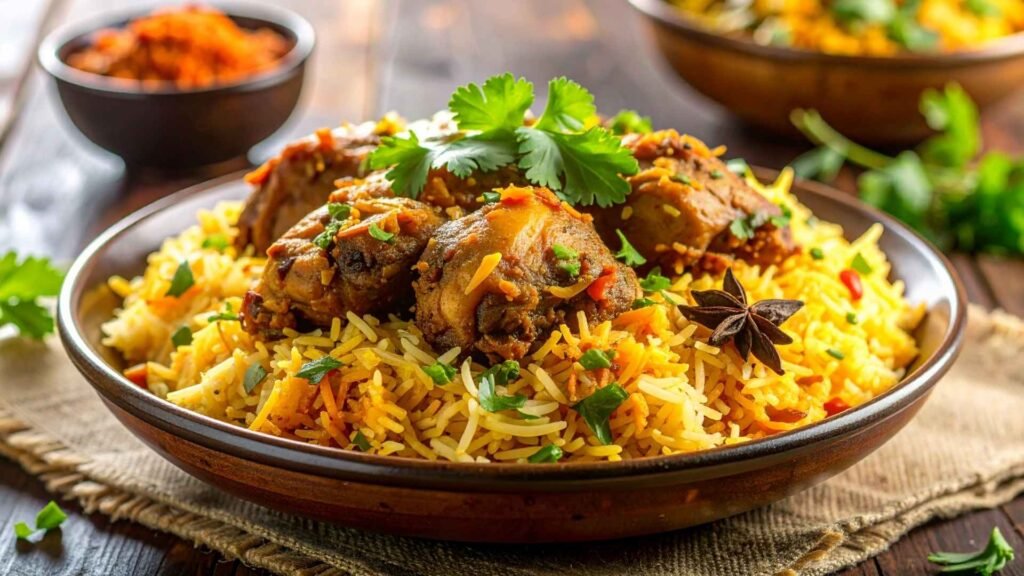
Hyderabadi biryani is famous for dum cooking and bold flavor. Hyderabad’s cuisine developed through royal kitchens and cultural mixing over time, which shaped its signature dishes and cooking style. (Sahapedia)
Lucknowi (Awadhi) Biryani
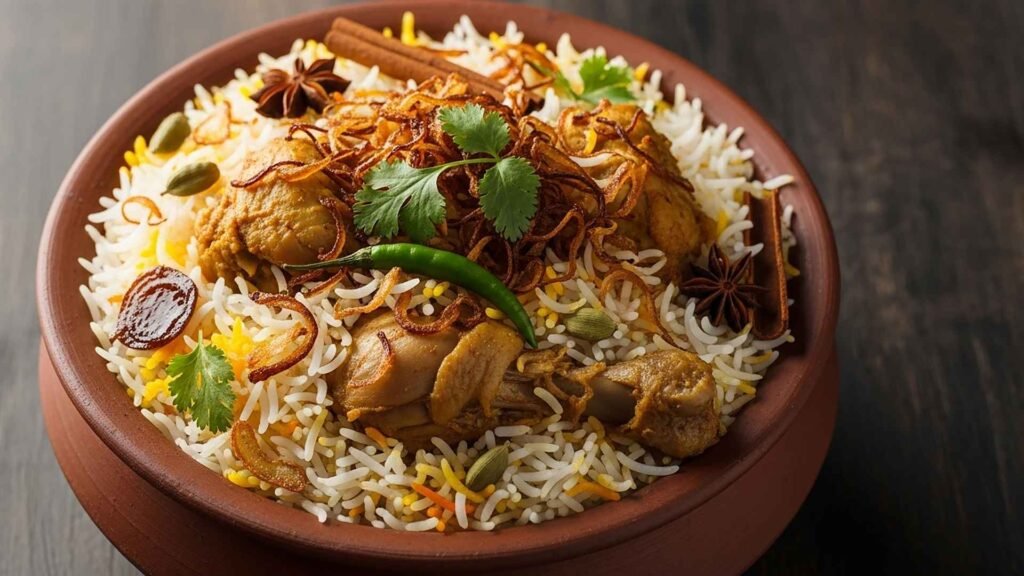
Awadhi biryani is known for a more delicate, fragrant taste, often focusing on aroma and balanced spices rather than heavy heat. (Many food history discussions place Awadh as important for “classic” biryani styles.) (Google Books)
Kolkata Biryani
Kolkata biryani is famous for its lighter spice profile and unique local touches (often discussed in Indian food culture as a distinct style).
Malabar / Thalassery Biryani (Kerala)
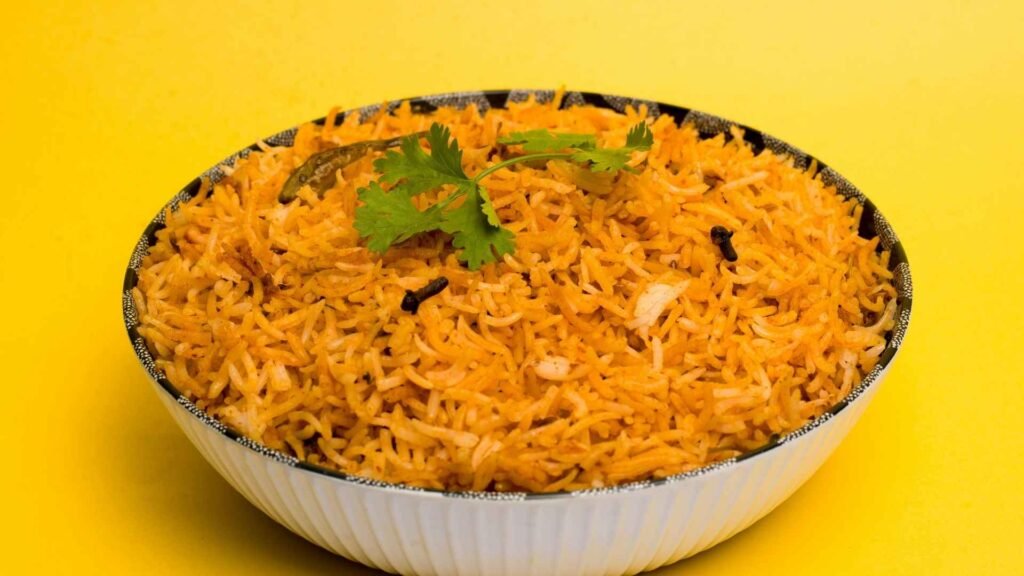
Kerala has its own biryani traditions with regional rice choices and coastal flavors.
Ambur / Dindigul Biryani (Tamil Nadu)
Tamil Nadu biryanis often have a strong local spice signature and are very popular in South India.
Is Biryani the Same as Pulao?
Not exactly.
- Pulao is usually simpler: rice and meat/veg cooked together with mild spices.
- Biryani is often layered and has stronger flavors, richer aroma, and dum finishing.
Many sources explain this difference as a common way people describe the two dishes. (Wikipedia)
Why Biryani Became So Popular
Biryani became a celebration food because it is:
- A complete meal (rice + protein + spices)
- Easy to cook in large quantities (weddings, festivals, gatherings)
- Full of aroma and taste that feels “special”
That is why biryani is often linked with family events and big occasions across South Asia.
Conclusion
Biryani is more than a dish—it is a food journey. Its name and many techniques connect to Persian roots, while its heart and variety grew across the Indian subcontinent through centuries of local innovation, royal kitchens, and cultural exchange. The result is the biryani we love today: fragrant, layered, and deeply regional. (Encyclopedia Britannica)
FAQs
Q1. What is the origin of biryani?
Biryani’s exact origin is debated, but many sources connect it to Persian roots in name and method, with major development in the Indian subcontinent over time
Q2. What does “biryani” mean?
Britannica links the term to the Farsi phrase “birinj biriyan,” meaning “fried rice.”
Q3. Is biryani a Mughal dish?
Many food histories connect biryani’s popularity and refinement to Mughal-era cooking culture, and Mughal-period sources like discussions around Ain-i-Akbari are often cited in food-history explanations.
References
- Encyclopaedia Britannica — “Biryani” (definition + etymology + cooking method). (Encyclopedia Britannica)
- Oxford Reference — “Biryani” (etymology from Persian roots). (oxfordreference.com)
- Sahapedia — “The History of Biryani” (historical context, dum cooking tradition). (Sahapedia)
- Ain-i-Akbari background (dating and context of the Mughal document). (Wikipedia)
- Google Books / Penguin Random House India — Pratibha Karan’s Biryani (popular documented view of Mughal/Awadh links). (Google Books)