Why Some Indian Food Vendors Use Cheap Unhealthy Alternatives
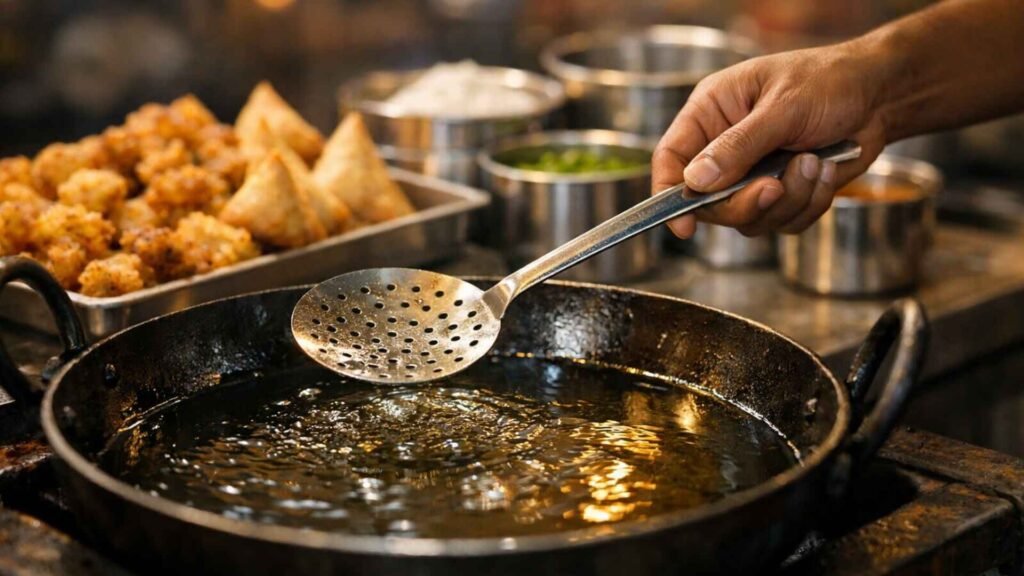
Why Some Indian Food Vendors Use Cheap Unhealthy Alternatives to Make Food
Indian street food is famous for taste, crunch, and quick service. But many people notice that some vendors use cheaper fats and oils that may be unhealthy—like vanaspati (partially hydrogenated oil), palm oil/palmolein, or oil reused many times.
It is important to say this clearly: not every vendor does this. Many use good-quality oil and follow safe practices. But in price-sensitive markets, cheaper choices are common, and that creates a real public health issue.
This article explains why it happens, what research says about the risks, what Indian rules say, and what safer options exist—using easy English and verified sources.
What “cheap unhealthy alternatives” usually means
1) Vanaspati (partially hydrogenated vegetable oil)
Vanaspati is often cheaper and can make food taste rich. But it has been a known source of industrially produced trans fat, which has no health benefit and increases heart disease risk. (World Health Organization)
2) Palm oil / palmolein
Palm oil is widely used because it is often cheaper and performs well for frying. It is also relatively high in saturated fat compared with several other commonly used oils. (Ovid)
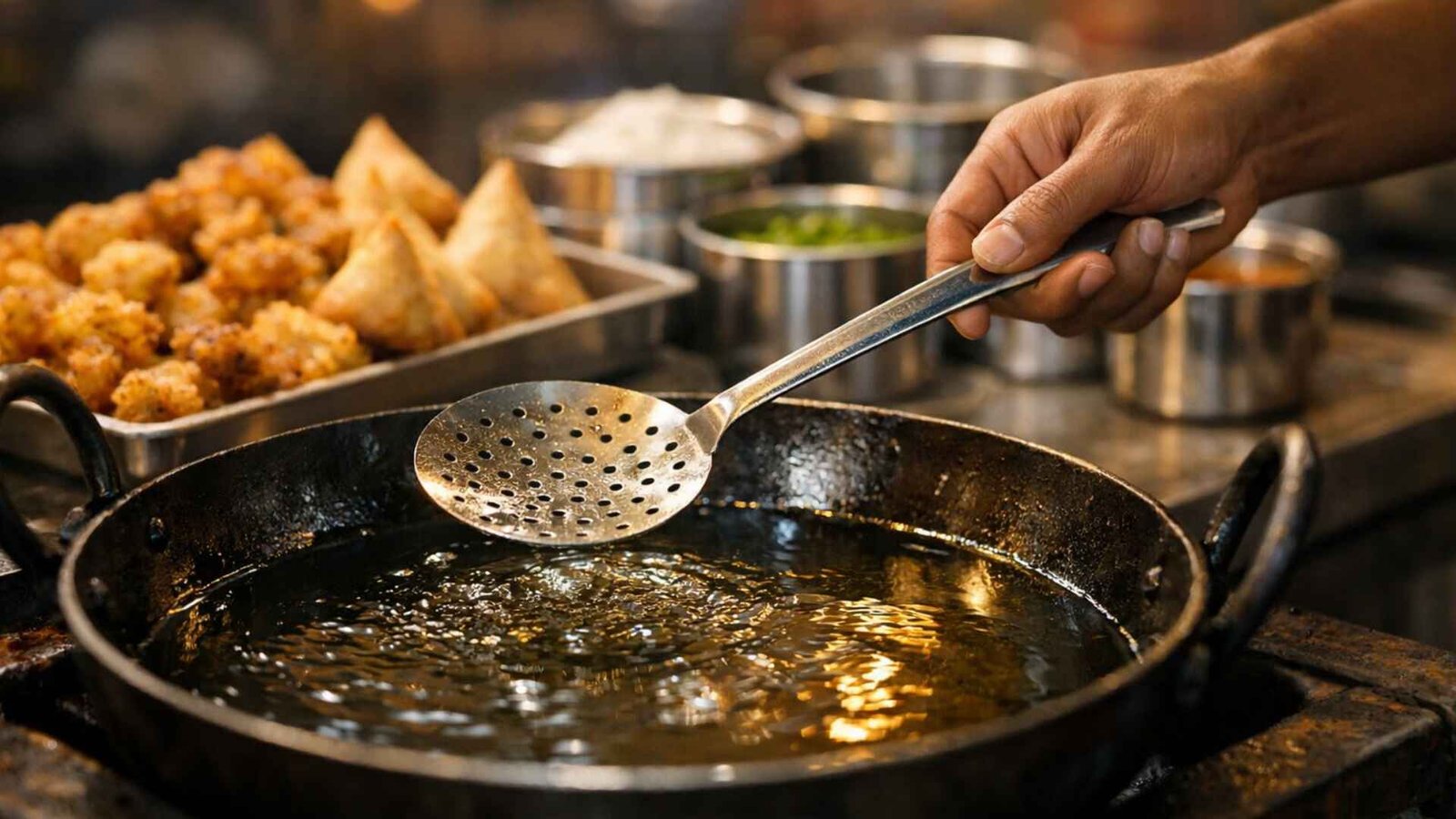
3) Reused frying oil (oil heated again and again)
When oil is heated repeatedly, it degrades. Harmful by-products (like aldehydes and other oxidation products) can increase. (FSSAI)
The real reasons vendors choose cheaper options
1) Thin profit margins + strong price pressure
Most customers want street food tasty and very affordable. Vendors compete on price. Cooking oil is a major cost, especially for deep frying. When input costs rise, cheaper oil becomes an easy way to keep prices low.
2) Frying performance and “crispiness”
Some cheaper fats (like palmolein) can handle frying heat well and give a consistent crunch. Vendors often prefer oils that:
- don’t smoke too fast,
- keep food crisp longer,
- don’t change flavor quickly.
3) Longer shelf life and “stability”
Older Indian dietary guidance notes that foods made with vanaspati/saturated fats can stay “fresh” longer because these fats resist oxidation more than some polyunsaturated oils—one reason they became popular in commercial snacks/sweets. (ICMR National Institute of Nutrition)
(This does not mean they are healthier—only that they can be more shelf-stable.)
4) Bulk availability and supply chain
Palm oil is widely available at scale and is heavily used by food businesses. Research and policy discussions have highlighted how palm oil became a major, affordable fat in India’s food system. (Ovid)
5) Reusing oil reduces daily spending
Deep frying needs a lot of oil. If a vendor replaces oil daily, costs rise. So some reuse oil multiple times—especially during long business hours.
6) Lack of awareness (or confusion)
Some small vendors may not fully understand:
- what trans fat is,
- why oil quality changes after repeated heating,
- what “safe reuse” limits are.
7) Weak monitoring and uneven enforcement
India has rules on degraded oil and trans fats, but monitoring every small stall daily is difficult. That gap makes unsafe practices more likely in some places.
Why this can be harmful (what research says)
A) Trans fats raise heart risk
WHO states that industrially produced trans fat has no known health benefits and recommends keeping trans fats below 1% of total energy intake, and avoiding industrial trans fats. (World Health Organization)
A review paper notes that in India, trans fats have been commonly consumed via vanaspati (hydrogenated vegetable oil), which is often cheaper and used for taste. (PMC)
B) Reheated oil forms harmful compounds
Scientific reviews report that heating oils at high temperatures (especially frying, and especially repeated heating) can form harmful oxidation products such as aldehydes, which may pose health risks when consumed regularly. (PMC)
C) Too much saturated fat can worsen cholesterol
Palm oil is relatively high in saturated fat compared with several traditional Indian oils, and research has discussed its public-health implications in India. (Ovid)
What Indian food safety rules and programs say
1) Limit on industrial trans fats
FSSAI announced limits aiming to reduce industrial trans fats to 2% in foods/oils (policy communications around Jan 2022 implementation). (FSSAI)
2) Rule for degraded frying oil: TPC limit (Total Polar Compounds)
FSSAI guidance explains that used vegetable oil with TPC more than 25% is not safe for consumption. (FSSAI)
3) RUCO: Repurpose Used Cooking Oil
FSSAI’s RUCO initiative promotes collecting used cooking oil and converting it to biodiesel, to prevent unsafe reused oil from returning into the food chain. (Eat Right India)
4) Official advice: avoid reuse and limit reheating
FSSAI guidance notes reuse should be avoided; if reheating is done, it should be limited (their guidance mentions a maximum of three times) to reduce formation of trans fats and degradation. (FSSAI)
Safer options that still work for vendors (practical, realistic)
If a vendor wants to improve health and still protect profit, these steps help:
1) Stop using vanaspati for frying
Choose non-hydrogenated oils and check supplier labels for “trans fat” compliance.
2) Control oil reuse (simple system)
- Use oil in smaller batches
- Filter crumbs daily (crumbs speed up oil breakdown)
- Track number of frying cycles
- If possible, monitor TPC (some businesses use testing methods/tools)
FSSAI’s TPC rule is a clear benchmark: >25% TPC = not safe. (FSSAI)
3) Join RUCO or sell used oil to authorized collectors
This reduces unsafe recycling into cooking and can create a small extra income stream in formal channels. (Eat Right India)
4) Offer more “less-fried” items
Add steamed/roasted options (idli, dhokla, grilled sandwiches, tandoor items, stir-fry) so customers have choices.
What consumers can do (without fear)
You don’t need to quit street food forever. Just reduce risk:
- Prefer freshly cooked items (less chance of old oil taste/smell).
- Limit deep-fried snacks frequency.
- Balance the day: if you eat fried street food, keep other meals lighter (dal, vegetables, fruits).
- If you have heart disease, diabetes, high cholesterol, or obesity risk, be extra careful—WHO warns trans fats increase risk. (World Health Organization)
Common myths
Myth: “Cheap oil is always toxic.”
Truth: Price alone does not decide safety. The bigger issues are trans fats, repeated overheating, and degraded oil.
Myth: “One plate of fried food will destroy health.”
Truth: Risk is mainly from regular intake over time, especially if trans fats and degraded oil are involved. (World Health Organization)
FAQ
Is palm oil always bad?
Not “always,” but it is higher in saturated fat than many oils, and heavy reliance on it in a population can raise public-health concerns—especially when combined with fried foods and ultra-processed diets.
What is the biggest danger in street food oils?
Two major risks are:
Industrially produced trans fats (from partially hydrogenated oils) (World Health Organization)
Repeatedly reheated/degraded oil (oxidation by-products) (PMC)
What does FSSAI say about reused oil?
FSSAI sets an indicator limit: used oil with Total Polar Compounds (TPC) > 25% should not be used. (FSSAI)
Conclusion
Some Indian food vendors use cheaper unhealthy alternatives mainly because of cost pressure, frying performance, availability, and reuse to reduce spending. The good news is that India has clear safety direction (trans fat limits, TPC rules, RUCO), and there are practical ways for vendors and consumers to reduce risk.
References (Verified Sources)
- World Health Organization (WHO) – Trans fat fact sheet (updated 24 Jan 2024). (World Health Organization)
- FSSAI – Trans fat limit policy communications (2% target). (FSSAI)
- FSSAI – TPC guidance and limits for used cooking oil (TPC 25%). (FSSAI)
- FSSAI – Guidance note on handling/disposal of used cooking oil + reuse advice. (FSSAI)
- FSSAI – RUCO initiative page / RUCO explainer PDF. (Eat Right India)
- Peer-reviewed review on trans fats and vanaspati in India (PubMed Central). (PMC)
- Scientific review on harmful aldehydes from heated cooking oils (PubMed Central, 2025). (PMC)
- BMJ (2013) research/policy discussion on palm oil and public health in India. (BMJ)