Auto Shankar : True Story of an Indian Serial Killer
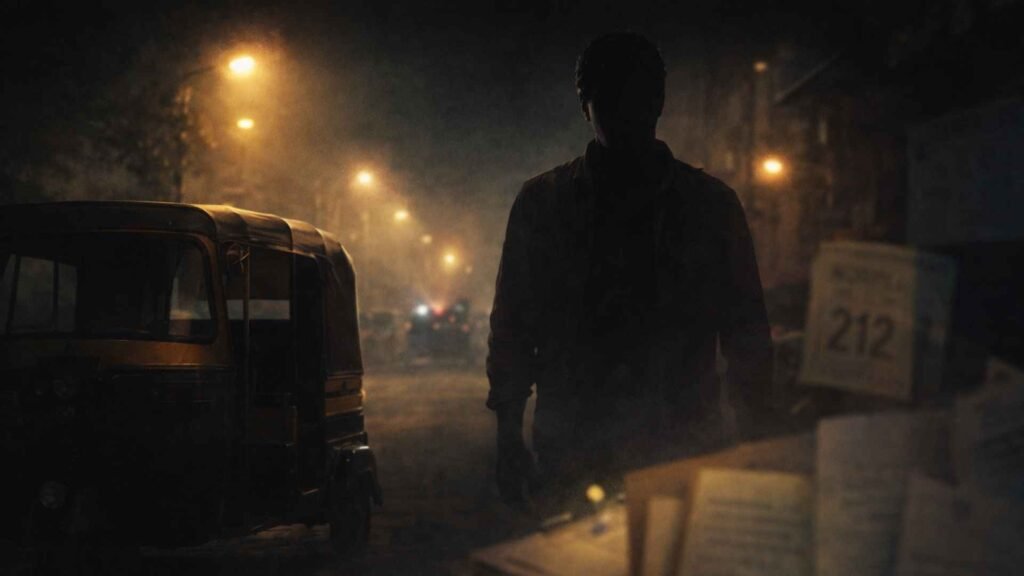
Table of Contents
Early Life: A Troubled Beginning
Gowri Shankar was born in the 1950s in Madras (now Chennai), Tamil Nadu. His childhood was unstable. He came from a poor background and had very little formal education.
From a young age, Shankar showed violent behavior. He often got into fights and petty crimes. As he grew older, his criminal activities increased, and he became involved in alcohol abuse, theft, and assault.
Eventually, he started driving an auto-rickshaw, which gave him access to different parts of the city and many people. This job later became an important part of his crimes.
Descent into Crime
During the late 1970s and early 1980s, Shankar became deeply involved in the criminal underworld of Chennai. He worked as a fixer and enforcer for powerful people.
He targeted:
- Sex workers
- Small-time criminals
- People who threatened to expose him or his associates
What made Auto Shankar especially dangerous was that he did not act alone. He had accomplices, including family members and close associates, who helped him lure victims and hide evidence.
The Murders: A Pattern of Brutality
Auto Shankar committed multiple murders over several years. The killings were extremely violent. Victims were often:
- Strangled
- Poisoned
- Burned alive
Many murders were committed to silence witnesses or eliminate rivals. Some victims were killed because they knew too much about illegal activities involving influential people.
One of the most shocking aspects of the case was the claim that some police officers and politicians protected him. Shankar himself later alleged this during court proceedings.
Arrest and Investigation
In 1988, the Tamil Nadu Police finally arrested Auto Shankar after linking him to a series of disappearances and murders.
The investigation uncovered:
- Multiple murder sites
- Eyewitness testimonies
- Confessions from accomplices
His arrest sent shockwaves across India. Newspapers covered the case daily, and the public followed every development closely.
Trial and Conviction
Auto Shankar was tried in a sessions court in Chennai. The case was based on:
- Strong circumstantial evidence
- Witness statements
- Confessions
In 1991, the court convicted him of multiple murders and sentenced him to death. His appeals were rejected by higher courts, including the Supreme Court of India.
Execution
On April 19, 1995, Auto Shankar was executed by hanging in Salem Central Prison, Tamil Nadu. His execution marked the end of one of India’s most terrifying criminal chapters.
He remains one of the few serial killers in India who received the death penalty.
Impact on Indian Society
The Auto Shankar case had a deep impact on India:
- It exposed links between crime and corruption
- It raised serious questions about police accountability
- It changed how serial crimes were investigated in India
The case is still studied by criminologists, law students, and journalists as an example of how systemic failures can allow criminals to operate for years.
Popular Culture and Media
Auto Shankar’s life inspired books, documentaries, and web series. His story is often used to show the dark side of unchecked power and criminal networks.
However, responsible reporting avoids glorifying his actions and focuses on the victims and lessons learned.
Why the Story Still Matters Today
Auto Shankar’s story is not just about a killer. It is about:
- Abuse of power
- Silence of witnesses due to fear
- The importance of a fair and independent justice system
His case reminds society that crime thrives when accountability fails.
Conclusion
Auto Shankar was a product of violence, corruption, and systemic failure. While he is remembered as a brutal serial killer, his story also serves as a warning—that crime cannot be ignored, and justice must be transparent.
Understanding his case helps ensure that such crimes are prevented in the future.
Research References (Verified Sources)
- Supreme Court of India Judgments – State of Tamil Nadu vs Gowri Shankar
- Frontline Magazine (The Hindu Group) – Investigative reports on the Auto Shankar case
- The Hindu Archives – Court proceedings and execution reports
- National Crime Records Bureau (NCRB) – Historical crime data
- Crime studies published by Tata Institute of Social Sciences (TISS)