The Woman Who Sang at a Djinn Wedding
Why people keep searching for “the woman who sang in a djinn marriage ceremony”
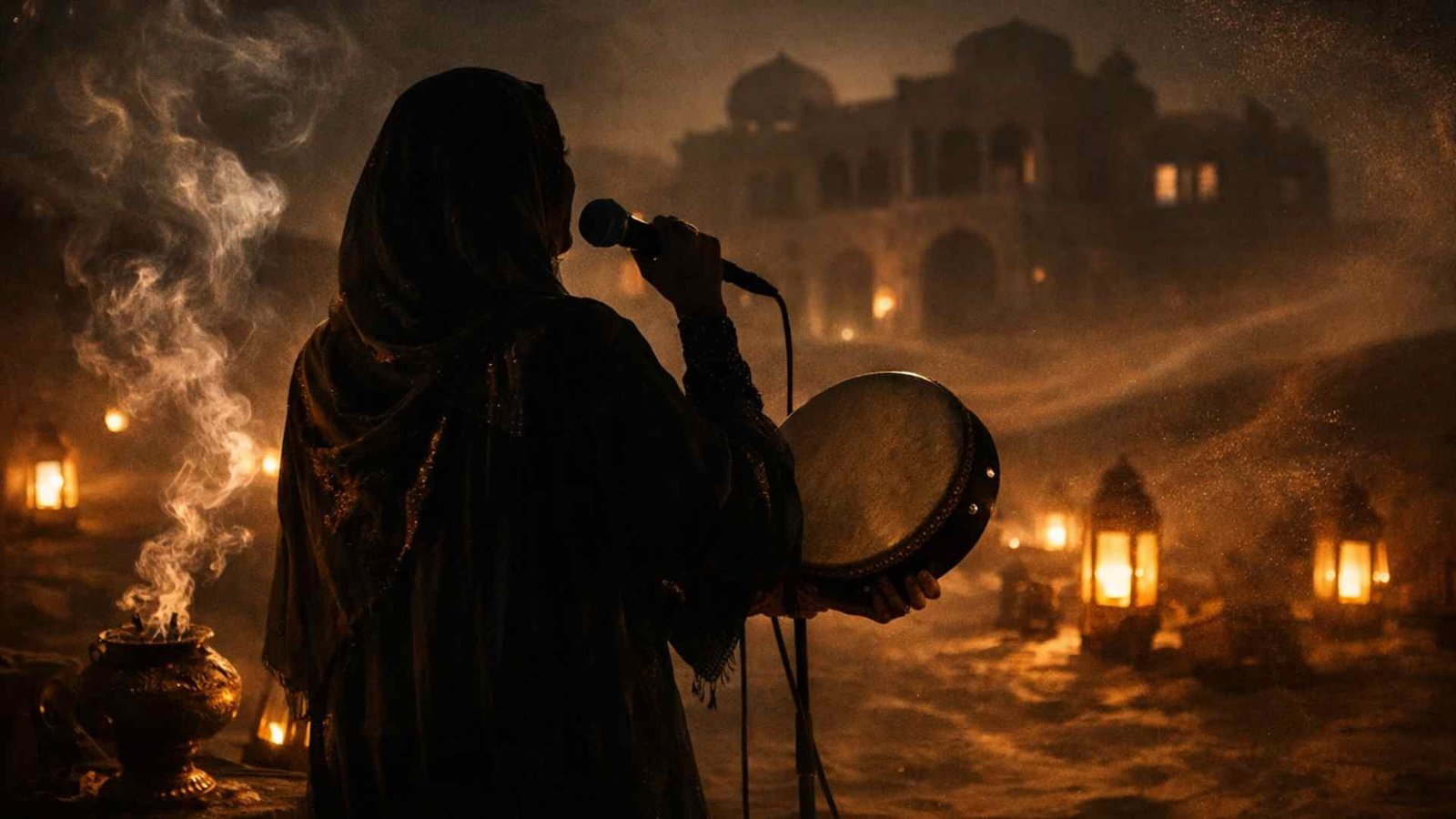
Across the Arab Gulf (and now globally on social media), one story gets retold in countless versions: a female wedding singer is hired for a private celebration, realizes the guests aren’t human, and discovers she’s been performing at a djinn (jinn) marriage ceremony. In Kuwait, this tale is commonly attached to a “ṭaggāqa” (طقّاقة)—a traditional women’s wedding performer—often named Noura, sometimes styled online as Noura Al-Taqaqa / Noora Takkakah. (VICE)
This article treats the story for what it is in reliable sources: a widely circulated urban legend with strong cultural roots, plus a real person whose life is sometimes (fairly or unfairly) woven into it.
Quick clarity: “Djinn” in belief vs. “Djinn wedding singer” as a story
In Islamic tradition and wider Middle Eastern folklore, jinn are understood as unseen beings (with many interpretations across communities and scholars). (PMC)
But the specific “wedding singer performed for jinn” narrative—especially the detailed mansion-in-the-desert plot—functions like an urban legend: memorable, moral-tinged, and easy to retell.
VICE’s Arabic feature on the Kuwait version explicitly notes there is no solid proof tying the famous singer Noura (daughter of “Ṣan‘a”) to the incident, and describes how the tale persists in popular storytelling despite the lack of hard evidence. (VICE)
What the legend usually claims (the common plot points)
While details change by storyteller, the “djinn marriage ceremony” narrative often includes:
- A lucrative last-minute booking far from the city (sometimes dated to the late 1990s). (VICE)
- A lavish venue that feels “off” despite bright lights, food, and celebration.
- Strange physical cues (guests’ hands “like stone,” feet “like goats,” unnatural dancing).
- A sudden reveal: the house is “actually abandoned,” or the performers flee and later learn the location shouldn’t have been inhabited.
- Aftermath: the singer quits performing, disappears, or is traumatized into silence.
This “shape” is typical of folk horror: it blends fear of the unknown, warnings about greed or risky work, and the taboo boundary between the seen and unseen.
The real person often connected to the story: Kuwaiti folk singer Noura
Here’s the part many retellings blur: there really was a well-known Kuwaiti folk artist named Noura (نورة), remembered for heritage songs and wedding performances.
- A Kuwaiti newspaper obituary-style piece reports the death of the folk artist Noura on May 9, 2016, describing her as a prominent performer of traditional songs with popularity in Kuwait and the Gulf, from an artistic family, and known for writing/composing and playing oud. (جريدة الجريدة الكويتية)
- Arabic Wikipedia summarizes her biography (birth in 1950; death in 2016; Kuwaiti folk singer; studied political science; associated with Kuwaiti folk performance culture). Use this as secondary background, not final proof. (Wikipedia)
Key point: credible sources support her existence and career. They do not confirm the supernatural “djinn wedding” event.
So did “the woman who sang at a djinn marriage ceremony” actually happen?
What higher-quality reporting says
VICE’s Kuwait-focused piece explains why the story feels believable to many—because jinn-related narratives and “possession” talk are culturally widespread—but emphasizes the absence of material evidence (no verifiable audio/video, no definitive primary source naming the singer, and contradictions across retellings). (VICE)
VICE also mentions the tale being written up in a Kuwaiti crime magazine (“مجلة الجريمة الكويتية”) without naming the singer, reinforcing the idea that the narrative circulated as story long before today’s viral clips. (VICE)
Why social media “proof” isn’t proof
You’ll find YouTube videos and reels presented as “the true story,” sometimes claiming the singer spoke publicly about it. These are not automatically reliable (they often recycle the same script, with no primary documentation). (YouTube)
You’ll also find Reddit threads explicitly calling the “Noura Al Taqaqa” version fictional—useful as an example of online debate, but still not a scholarly source. (Reddit)
Bottom line: Based on the most dependable sources available in open publication, this remains unverified folklore attached to a real cultural figure.
Cultural context that makes the story “stick”
1) Who is a “ṭaggāqa” (طقّاقة)?
In Gulf usage, “ṭaggāqa” refers to a popular/traditional female wedding singer who performs with a women’s ensemble and percussion-driven rhythms in private celebrations. VICE describes this explicitly in the Kuwait context. (VICE)
2) Jinn beliefs are part of many communities’ worldview
Academic and medical-anthropology literature notes that belief in jinn is real and meaningful for many Muslims, shaping interpretations of illness, misfortune, and fear—though views vary widely. (PMC)
Encyclopaedia Iranica also documents theological and philosophical debates over literal vs. allegorical interpretations across time. (Encyclopaedia Iranica)
3) Music, ritual, and “the unseen” appear together in regional traditions
In parts of North Africa and the Middle East, spirit-possession or healing ceremonies can involve music as a structured social practice (separate from the Kuwaiti wedding legend, but relevant to why “music + spirits” feels culturally plausible). (PMC)
This doesn’t validate the djinn-wedding story as factual—but it helps explain why audiences don’t immediately dismiss it.
How urban legends evolve: why the “djinn wedding singer” story spreads so fast
This legend thrives because it has:
- A recognizable setting (wedding performance, late-night drive, isolated venue)
- A moral hook (money, temptation, danger)
- Sensory details that invite retelling (lights, food, “strange feet,” abandoned house twist)
- A named anchor (attaching the tale to “Noura” makes it feel historical)
Over time, online creators compress the story into short, high-emotion clips—perfect for virality, poor for verification.
Modern afterlife: the story inspires entertainment
By 2025, the legend had become explicit cultural material for stage entertainment: a Kuwaiti theatrical work titled “الطقاقة نورة .. عرس الجن” is listed as released/shown in June 2025, framing the premise in a wedding-like celebratory atmosphere that turns mysterious. (ElCinema)
That’s an important signal: society often preserves these tales as folklore and performance, even when factual certainty is absent.
Was Noura Al-Taqaqa a real singer?
There was a real Kuwaiti folk singer named Noura known for performing traditional songs and private events, reported in Kuwaiti press at her death in 2016. (جريدة الجريدة الكويتية)
Did she actually sing at a djinn marriage ceremony?
No reliable public source confirms that claim. A well-known Kuwait-focused article describes the story as widely told but not supported by tangible proof, and notes uncertainty over whether the famous Noura is even the intended person. (VICE)
Why do people believe the story?
Because jinn belief is culturally meaningful in many places, and the legend’s structure resembles other persuasive folk tales—specific details, moral tension, and a named “real” figure. (PMC)
Research references (selected)
- VICE Arabic — “الطقاقة الكويتية نورة وعرس الجن” (2021). (VICE)
- Aljarida (Kuwait) — “رحيل الفنانة الشعبية نورة” (May 9, 2016). (جريدة الجريدة الكويتية)
- Arabic Wikipedia — “نورة (مغنية كويتية)” (background biography; use cautiously). (Wikipedia)
- Khalifa, N. (2005) — “Possession and jinn” (peer-reviewed medical context). (PMC)
- Encyclopaedia Iranica — “GENIE” (historical/theological notes on jinn). (Encyclopaedia Iranica)
- El-Zein, Amira — Islam, Arabs, and the Intelligent World of the Jinn (publisher page). (Syracuse University Press)
- JSTOR — Zar: Spirit Possession, Music, and Healing Rituals in Egypt (music/ritual context). (JSTOR)
- elCinema — listing for the 2025 play “الطقاقة نورة .. عرس الجن”. (ElCinema)
- ANTheatre (Qatar) — event/project listing “الطقاقة نورة – عرس الجن”. (ANTheatre)